Why Do Builders Sell Pre-Construction Communities in Multiple Phases? An Ontario Buyer’s Guide
A master-planned community can take a decade or more to finish. Understanding how phases, releases, servicing and approvals actually work changes which lot you buy and what you expect to live beside.
The short answer
Builders phase a master-planned community because servicing an entire site at once would demand enormous capital before any revenue arrives, so approvals, infrastructure and construction move progressively across five, ten, fifteen or more years. Before a buyer chooses a lot, Robin Patel checks the planning information for the surrounding land, since Phase 1 is not automatically cheaper.
Written forBuyers and investors considering a pre-construction home in a master-planned community in the GTA or surrounding Ontario.
The short version
- A phase and a release are not the same thing: a phase is a development and construction stage, while a release is a group of lots or units made available for sale within it.
- Builders phase communities because servicing an entire site at once would demand enormous capital before any revenue arrives — infrastructure, approvals and construction capacity all move progressively.
- Phase 1 is not automatically cheaper and later phases are not automatically more expensive; pricing follows costs, demand and market conditions in both directions.
- Buying into an early phase means years of adjacent construction and uncertainty about what gets built around you — check the planning information for surrounding land before you buy, not after.
- Proposed, planned, approved, funded, under construction and completed mean different things; ask which word applies to every amenity a sales presentation mentions.
A large community does not appear overnight
When you see a major pre-construction development containing hundreds or thousands of homes, plus parks, roads, schools, commercial areas and community facilities, the whole project may take five, ten, fifteen or more years to fully develop.
Instead of building and selling everything at once, developers normally divide large communities into phases — Phase 1, Phase 2, Phase 3, future phases, final phase. Understanding why they do that helps pre-construction buyers make better decisions about pricing, where in the community to buy, construction timelines, future development and long-term value.
What is a phase in a pre-construction development?
A phase is a portion of a larger development that is planned, serviced, marketed, sold and constructed during a particular stage of the overall project. A developer who controls enough land for a couple of thousand homes will typically release them in blocks of a few hundred at a time rather than all at once, and the number, size and timing of those phases varies significantly from development to development.
A master-planned community can also include very different housing types and uses: detached and semi-detached homes, traditional townhouses, back-to-back and stacked townhouses, condominiums, rental buildings, parks and trails, schools, retail plazas, employment or commercial areas, and community facilities. That mix is part of why completing a major community takes many years.
Why can a pre-construction community take 5 to 15 years or more?
There is not one single reason. Large developments involve a combination of land-use planning, municipal approvals, financing, infrastructure, servicing, construction capacity, market demand and sales strategy. The stages below are roughly how it works.
Stage 1: the developer acquires or controls the land
Everything starts with land. A developer may purchase a large parcel directly, assemble several neighbouring properties, partner with existing landowners, or obtain an option or other contractual interest in the property.
At this stage the land may not be ready for residential construction at all. The developer has to determine whether the proposed development is financially and technically feasible: what the land is currently zoned for, how many homes could be built, what densities might be permitted, whether municipal water and sewer capacity are available, whether new roads are required, whether environmental constraints exist, whether part of the land is protected, where parks will go, whether school sites are required, what development charges and other municipal costs apply, and what infrastructure has to be constructed.
This due-diligence and planning work can begin years before consumers ever hear about the project.
Stage 2: the community is designed
The developer works with a team that can include urban planners, architects, engineers, surveyors, environmental consultants, transportation consultants, landscape architects, lawyers, financial consultants and municipal officials, turning the concept into an actual development plan.
For a subdivision, the proposed plan identifies streets, lots, parks, blocks and other community features. The municipality and other approval authorities then evaluate whether the development conforms with applicable planning policies, and whether the land and infrastructure can support what is proposed.
Stage 3: municipal planning and subdivision approvals
This is one of the biggest reasons major developments take years. In Ontario, subdivision approval helps ensure the land is appropriate for the proposed use and that roads, water, sewage, parks and other community requirements are properly addressed.
A typical subdivision process can involve pre-consultation with municipal or approval authority staff, submission of the application, technical studies, circulation to departments and agencies, public notice and planning review, draft plan approval, conditions of approval, satisfaction of those conditions, final subdivision approval and registration of the subdivision.
Draft approval does not mean everything can immediately be built. The developer may have numerous conditions to satisfy before final registration.
Stage 4: infrastructure and servicing
Before homes can function, the community needs infrastructure — water mains, sanitary sewers, stormwater systems and management ponds, roads, sidewalks, street lighting, hydro, natural gas, telecommunications, grading, drainage, parks and trails.
Large developments may also require significant infrastructure upgrades outside the development itself, because thousands of additional residents create demand for greater road, sewer or water capacity. Infrastructure is therefore both a major expense and a major scheduling constraint.
Stage 5: why not service the entire community at once?
Imagine a developer owns enough land for a few thousand homes. Servicing the whole property immediately would require an enormous amount of capital before enough homes have been sold to generate any revenue.
So the land is serviced progressively instead. Install the infrastructure for the first section, sell and construct Phase 1, extend roads and servicing, sell and construct Phase 2, then continue infrastructure farther into the community. Development expenditure and construction activity happen in step with sales rather than all at the front.
Stage 6: pre-construction sales begin, and phase is not release
Once the necessary regulatory, warranty and project requirements are satisfied, the developer can begin selling homes. In Ontario, builders and vendors of new homes must satisfy applicable licensing and Tarion authorization requirements before offering or agreeing to sell qualifying new homes.
The first release might contain only a fraction of the eventual community — a builder in a two-thousand-home master community may open Phase 1 with a couple of hundred homes, and may initially release only a few dozen lots out of that. Once those sell, another group is released.
That distinction matters: a phase generally refers to a larger development and construction stage, while a release is simply another group of lots or units made available for purchase within that phase. Phase does not equal release.
Stage 7: why builders do not release every home at the same time
Supply and demand. If a builder released a thousand similar homes simultaneously, buyers would have enormous selection and the builder would effectively compete against its own inventory. Smaller releases let the builder manage what is available.
Pricing strategy. If the market strengthens and later phases become more valuable, subsequent releases might be priced higher. But prices do not automatically increase between phases — if the market declines, interest rates change or demand weakens, later-phase prices can stay flat or be effectively reduced through incentives.
Construction capacity. Builders have limited crews, trades, equipment, supervisors, materials, financing capacity and administrative resources. Building thousands of homes simultaneously would be extremely difficult; phasing lets construction teams move progressively through the development.
Financing and cash flow. Development is capital intensive — land acquisition, financing, planning, engineering, municipal approvals, development charges, infrastructure, construction, labour, materials, marketing, sales and warranty obligations. Selling and constructing progressively helps the developer manage capital requirements and project risk.
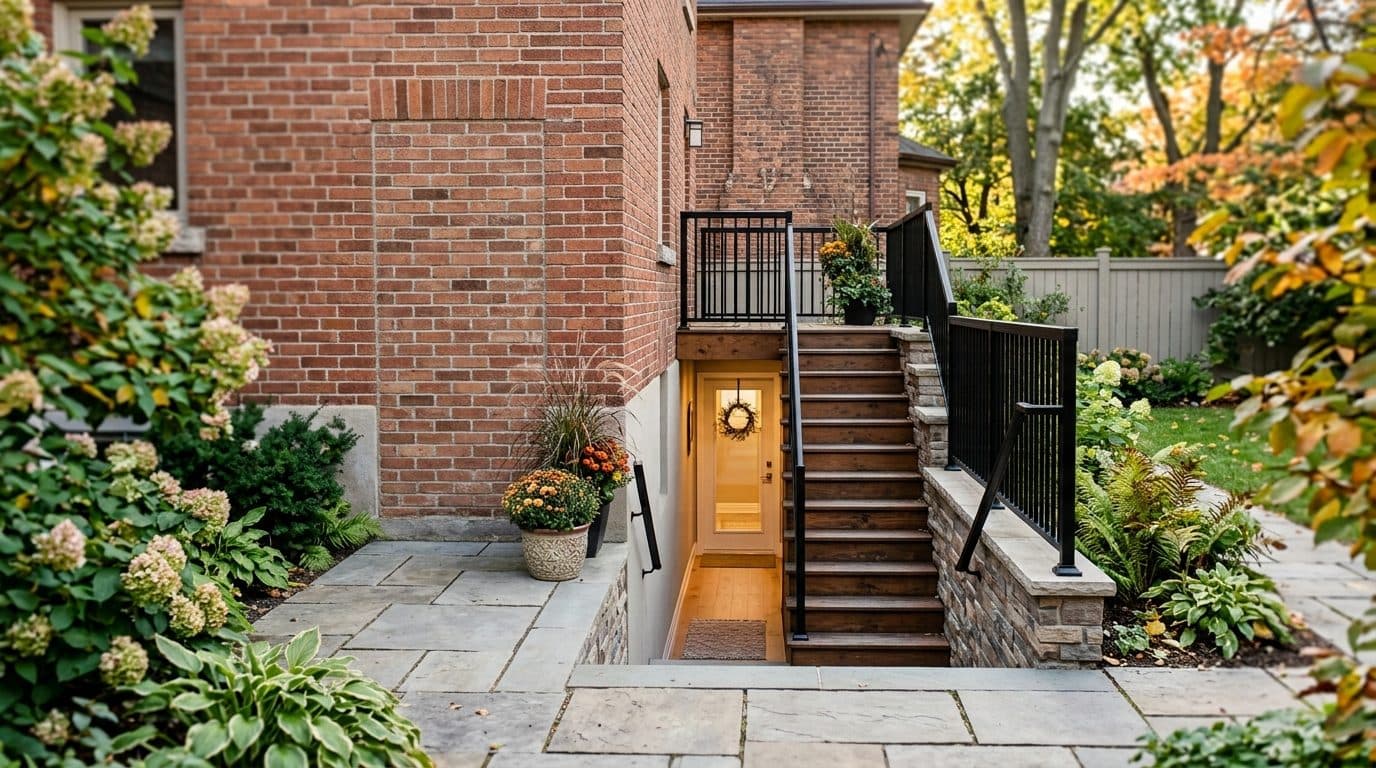
Testing market demand. Early phases show what buyers actually want — particular lot widths, double-car garages, four-bedroom layouts, main-floor offices, legal or potential basement entrances, larger kitchens, multigenerational layouts. Developers can use that feedback when planning later releases, subject to approvals and construction constraints.
Stage 8: construction of the first homes
Once approvals, permits, servicing and other requirements are satisfied, construction proceeds through excavation, foundation, framing, roofing, mechanical systems, insulation, drywall, interior finishes, exterior work, inspections and finally possession and closing.
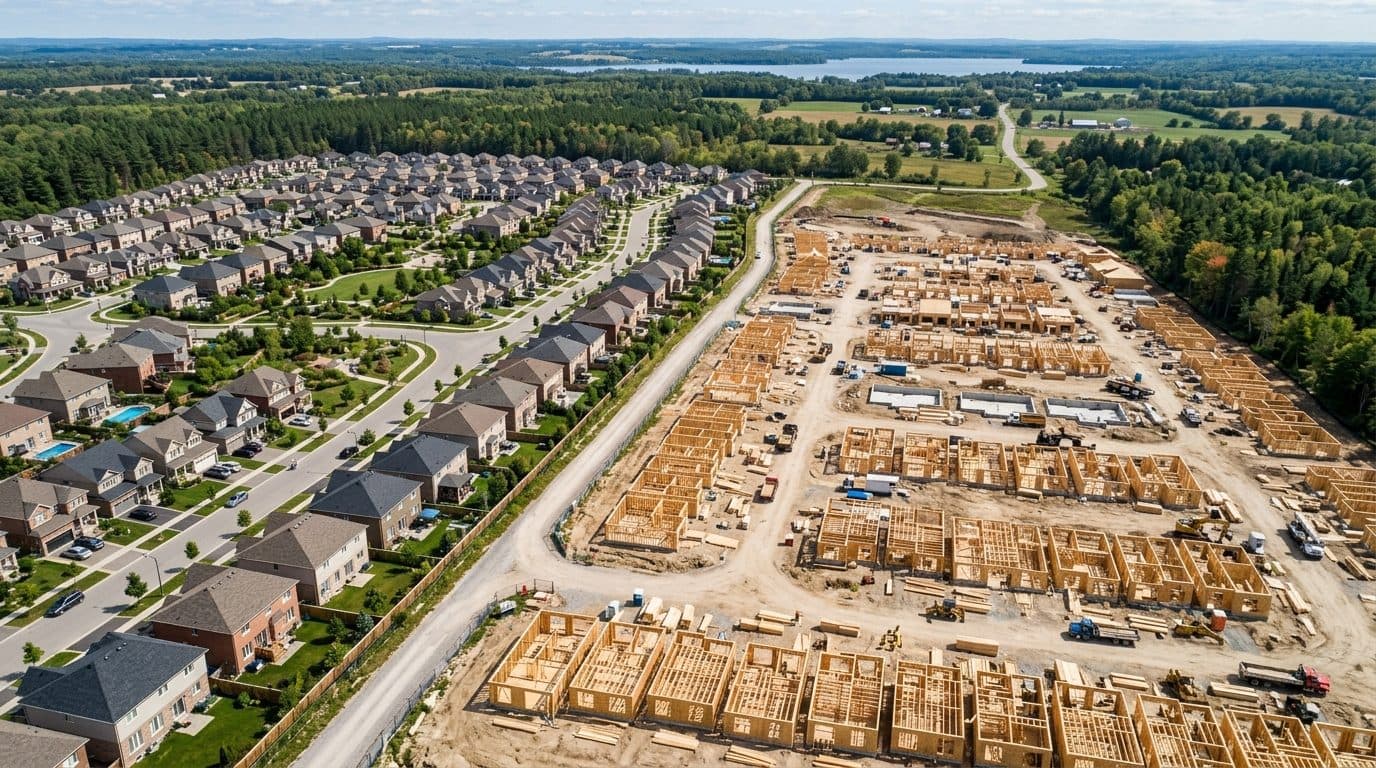
Meanwhile another section of the community may already be under servicing or on sale. At any given moment a large community can have Phase 1 residents moving in, Phase 2 homes under construction, Phase 3 homes being sold, Phase 4 servicing underway and Phase 5 still in planning. That simultaneity is the key thing to understand about master-planned communities.
Why you can live in a community while it is still being built
Because different phases sit at completely different stages. You might buy in Phase 1 and move in while construction continues nearby for several more years.
During that period residents may live with construction traffic, dust, noise, temporary roads or sidewalks, landscaping still being completed, future parks under construction, commercial amenities not yet open, schools not yet built, and more homes going up next door. That is a real consideration when buying into an early phase.
Early phase or later phase: which is better?
Neither is automatically better; they offer different things.
Buying early can mean greater selection, potential introductory pricing, more choice of lots and floor plans, the chance to get in before the community is established, and potential appreciation if the surrounding area grows. Appreciation is never guaranteed, and early buyers accept more uncertainty — future phases, roads, amenities and surrounding development may change, subject to planning approvals and builder decisions.
The disadvantages of an early phase are years of nearby construction, dust and noise, limited completed amenities, changing development plans, delays, uncertainty about schools, parks or commercial development, and future competing inventory. A beautiful rendering is a vision of the finished community; buyers need to know what is contractually guaranteed and what is conceptual.
Later buyers can physically see much more: what the streets look like, what homes were actually built, where the parks are, which amenities exist, how traffic flows, what commercial development arrived and how the neighbourhood has matured. There is less uncertainty. The trade-off, depending on market conditions, can be higher prices, less desirable lot selection, fewer floor plans and less potential upside — though higher later-phase pricing should never be assumed either. Markets move in both directions.
What is a master-planned community?
A master-planned community is a larger development designed as an interconnected neighbourhood rather than a collection of individual houses. It may eventually contain multiple residential phases, different housing types, parks, trails, schools, retail, community facilities, transit connections, employment areas and public spaces.
The master plan provides the long-term vision; the individual phases are how that vision gets delivered a piece at a time.
Why builders change floor plans or products between phases
The housing product offered in a late phase does not have to be identical to Phase 1. Changes happen because of buyer preferences, construction costs, Building Code requirements, municipal requirements, market conditions, lot sizes, density targets, architectural trends, changes in financing, or changes to the approved plans.
An earlier phase might contain more detached homes while later phases contain more townhouses or higher-density housing. Never assume that an undeveloped parcel will contain exactly the same type of homes as the phase you are buying in.
Why parks, schools and shopping are sometimes built later
Population has to develop before some amenities become practical or necessary. A neighbourhood with a hundred occupied homes will not support the same services as a completed community of thousands of residents.
As population grows, the area may gradually attract grocery stores, restaurants, medical clinics, daycare centres, retail plazas, professional services and transit improvements. Schools and other public facilities have their own planning, funding and approval processes — so do not assume a proposed school or amenity has a guaranteed completion date unless the responsible authority confirms it.
Why some phases are delayed
Even when a builder intends to move quickly, delays happen: municipal approvals, servicing constraints, permit timing, labour shortages, material shortages, financing conditions, interest rates, market demand, infrastructure delays, environmental requirements, appeals or planning issues, and changes in economic conditions.
This is why pre-construction purchasers need to understand the project’s contractual timelines and the protections that come with them.
What buyers should investigate before buying in a new phase
Before purchasing pre-construction, look beyond the model home and ask these questions.
One point deserves emphasis. Proposed, planned, approved, funded, under construction and completed do not mean the same thing. When a sales presentation mentions a future amenity, find out which of those words actually applies.
- Which phase am I buying in — early, middle or final?
- What will be built behind my property? Never assume an empty field stays empty; check the planning information for the surrounding land.
- Are future roads planned nearby? A quiet street today can eventually connect to another development.
- What type of homes are planned nearby — detached, townhouses, condominiums, rental apartments, commercial?
- What amenities are actually confirmed, and at what stage of approval?
- How long will construction continue? Buying Phase 1 of a ten-year project means construction is part of your environment for years.
- What are the deposit requirements — how much, when, who holds it, and what protections apply?
- What does the builder’s Agreement of Purchase and Sale say? It can be lengthy and very different from a resale transaction, and should be reviewed by a real estate lawyer within any applicable review period.
How a ten-year community typically unfolds
A large community tends to follow a recognizable arc. The first year or two go to land planning, engineering, approvals and servicing. Phase 1 sales and initial construction follow. Then Phase 1 occupancy overlaps with Phase 2 and 3 construction, while additional residential phases, parks and road connections come through the middle years. The later years bring the remaining residential phases and increasing commercial and community development, with the final phases and remaining community elements completed at the end.
Every development follows its own timeline. The point is the shape of it: the community you move into in year three is not the community you will live in at year ten.
The point is the shape of it: the community you move into in year three is not the community you will live in at year ten.
The most important lesson for pre-construction buyers
When you buy a pre-construction home, you are not simply buying a floor plan. You are buying a home, a lot, a location, a future neighbourhood and a development timeline. The last two get overlooked constantly.
So the question is not only do I like this house. It is also: what could this entire area look like five, ten or fifteen years from now? That question can matter more than choosing between two kitchen layouts.
Robin’s perspective
When Robin helps a buyer evaluate a pre-construction project, the assessment goes beyond the promotional brochure and the model home. Where does this phase sit within the overall community? What is planned around the property? What future phases may be coming? Where are the major roads? What housing types could surround the property? Where are parks and schools proposed? How developed is the surrounding community already? How long could construction continue? How does the builder’s current pricing compare with resale alternatives? What risks come with buying today and closing later?
A pre-construction purchase should make sense based on the buyer’s budget, lifestyle, timeline and long-term plans — not simply because a project is advertised as a good investment.
Frequently asked questions about pre-construction phases
Why do builders sell communities in phases? Large communities require substantial capital, infrastructure, approvals and construction resources. Phasing lets developers progressively service, sell and build sections while managing inventory, financing and market demand.
Can a pre-construction project take 10 or 15 years? Yes. Large master-planned developments can take many years, especially with thousands of homes and substantial infrastructure.
Is Phase 1 always cheaper? No. Developers sometimes use attractive early-phase pricing, but there is no rule requiring Phase 1 to be cheaper. Pricing depends on costs, demand and market conditions.
Does every phase automatically become more expensive? No. Prices can increase, stay flat or decline depending on the housing market, interest rates, construction costs, demand and the developer’s strategy.
Is buying Phase 1 better? Not necessarily. Early phases can offer selection and potential upside, but they also carry greater uncertainty and more years of construction.
Is buying the final phase safer? Later phases let buyers see more of the completed neighbourhood, but pricing and selection may be different.
Can the builder change future phases? Future development can change, subject to contractual rights, municipal approvals, planning requirements and other factors. Do not rely solely on conceptual marketing materials.
Can I move in before the whole community is finished? Yes. It is common for residents of earlier phases to occupy their homes while later phases remain under construction.
Should I buy pre-construction or resale? It depends on pricing, deposit availability, closing timeline, risk tolerance, housing needs and the local market. Compare the pre-construction opportunity against available resale properties rather than evaluating it in isolation.
Written by
Robin PatelSalesperson · The Agency Toronto
Updated
Published
Read in your language
A machine translation, not Robin’s words. For anything that decides money, ask him in Gujarati or Hindi directly.