Renting Out Your Basement in Ontario: The Landlord Guide to Utilities, Parking, Snow Removal and Taxes
Who shovels the snow, how utilities get split, how much parking you owe, and what CRA expects you to report — settled before the tenant moves in, not after the first argument.
The short answer
Robin Patel has homeowners document utilities, parking and maintenance in the Ontario Standard Lease before a basement tenant moves in. Ontario places property-maintenance duties on the landlord, so a tenant is not automatically responsible for snow removal or lawn care, and basement rental income is generally reported to the CRA on Form T776.
Written forOntario homeowners renting out a basement apartment in their own home, especially first-time landlords in the GTA.
The short version
- A basement tenant is not automatically responsible for snow removal or lawn care — Ontario places property-maintenance duties on the landlord, and a lease clause cannot simply transfer a statutory obligation.
- There is no universal legal utility split. Apportioning utilities between the upstairs and the basement is governed by the Residential Tenancies Act, including what must be disclosed to a prospective tenant.
- There is no rule entitling a basement tenant to a set number of parking spaces; the Ontario Standard Lease is where the number, location and any separate parking charge get specified.
- Basement rental income must generally be reported to CRA, typically on Form T776 — and a reasonable rental portion of expenses such as mortgage interest, property taxes and utilities may be deductible.
- Tell your home insurer before you rent. Coverage may need an endorsement or landlord coverage, and the Standard Lease allows you to require the tenant to carry liability insurance.
Rental income comes with responsibilities
Renting out a basement apartment can help an Ontario homeowner generate additional income and offset mortgage and household expenses. But becoming a landlord also creates responsibilities, and most of the disputes Robin sees start with something that was never written down.
The questions homeowners ask Robin most are always the same ones. Does my basement tenant have to shovel the snow? Who cuts the grass? How should utilities be divided? How much parking should I provide, and can I charge extra for it? Do I have to report basement rental income to CRA? Can I deduct part of my utilities, property taxes or mortgage interest? What should be in the lease? What happens if the basement has a separate entrance? Does the basement apartment have to be legal?
Ontario landlord-and-tenant rules, municipal by-laws and individual tax situations vary. This is general information, not legal, accounting or tax advice — get professional advice for your particular circumstances.
Quick answer: what is a basement landlord responsible for?
For a typical Ontario tenancy covered by the Residential Tenancies Act, the landlord remains responsible for maintaining the rental property and complying with applicable maintenance, health and safety standards. The Ontario Standard Lease also identifies matters such as parking, utilities, maintenance and services that should be clearly addressed before the tenancy begins.
A good basement rental arrangement establishes all of the following in writing, before the keys change hands.
- Monthly rent — the exact amount and the payment date
- Utilities — included, or the tenant’s responsibility
- Utility percentage — clearly established where applicable
- Parking — the number and location of spaces
- Snow removal — responsibility legally structured, not assumed
- Lawn care — responsibility legally structured, not assumed
- Laundry — private or shared, and any restrictions
- Internet — included, or the tenant obtains their own
- Storage — what areas the tenant can use
- Backyard — private, shared or unavailable
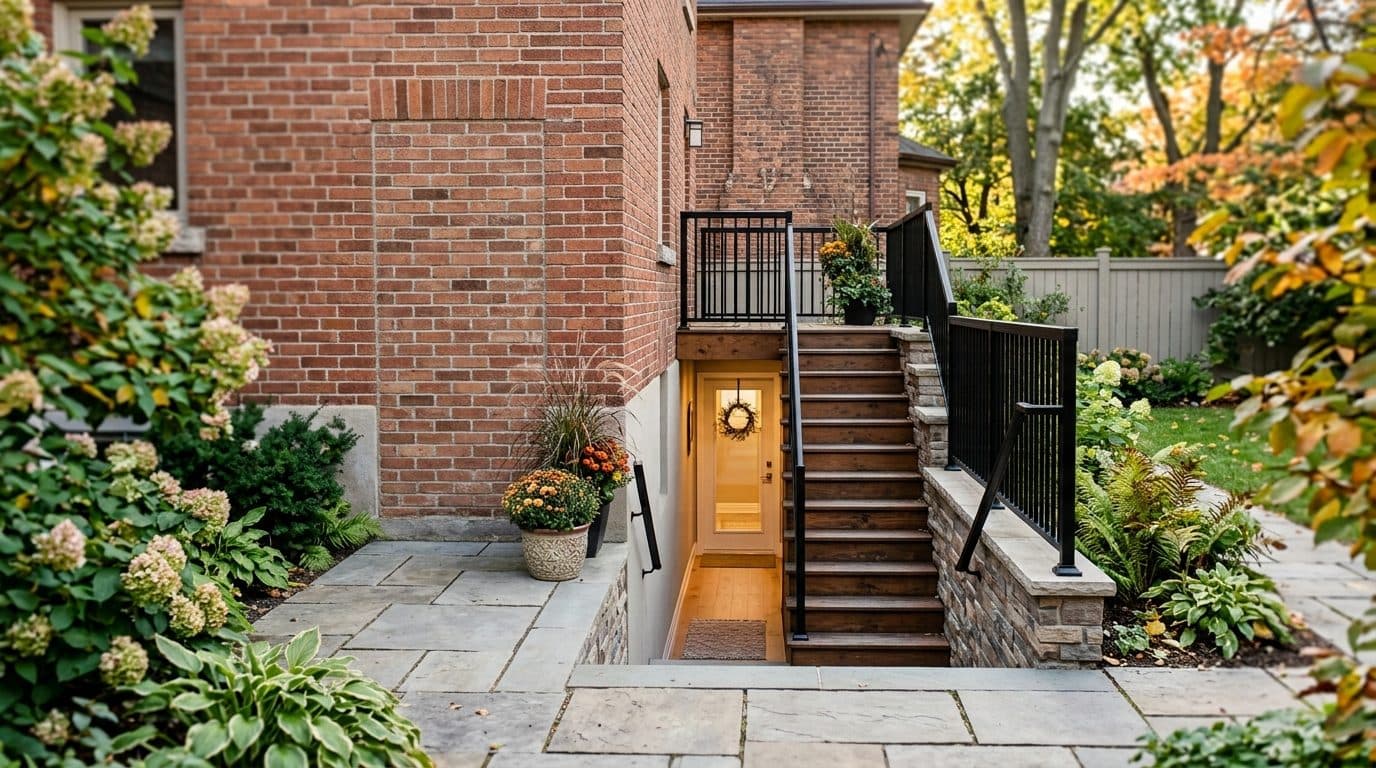
- Entrance — separate or shared
- Garbage — collection and storage arrangements
- Tenant insurance — whether liability insurance is required
- Smoking — rules established in the lease
- Any additional terms — written clearly and lawfully
Does a basement tenant have to remove snow?
Do not automatically assume that because someone rents your basement, they are responsible for shovelling the driveway, sidewalk or walkway.
Ontario’s Residential Tenancies Act places maintenance responsibilities on landlords: landlords are responsible for maintaining the residential complex in a good state of repair and for complying with applicable health, safety, housing and maintenance standards. Ontario’s Standard Lease guidance says the same thing from the other direction — the landlord must maintain the rental unit and property, while tenants are responsible for cleanliness and for damage caused by themselves or their guests.
Can a landlord make an arrangement with the tenant? Snow-removal arrangements require particular care. Rather than writing ‘tenant is responsible for all snow removal’ into a residential lease and assuming that resolves the landlord’s obligations, landlords should get legal advice about structuring a separate arrangement for maintenance services where appropriate. The Ontario Court of Appeal has considered this kind of clause.
For most owner-occupied houses with a basement tenant, the safest operational approach is for the homeowner to do the snow removal themselves, hire a snow-removal company, or set up a properly structured separate arrangement after getting appropriate advice. Snow and ice also create real liability exposure, which is its own reason not to leave this vague.
Does the basement tenant have to cut the grass?
The same caution applies to lawn and exterior property maintenance. A landlord should not assume that renting the basement makes the tenant responsible for maintaining the entire property.
Ontario’s Standard Lease states that landlords are responsible for maintaining the rental unit and property, and additional lease terms cannot take away rights or responsibilities established under the Residential Tenancies Act. If you want the tenant to provide lawn-care or other maintenance services, get legal advice about a properly structured arrangement rather than relying on a clause that tries to transfer your statutory obligations.
Who pays the utilities for a basement apartment?
This is one of the most important questions to settle before the tenant moves in. Utilities can include electricity, natural gas, water and wastewater, hot water, internet and other services, and Ontario’s Standard Lease has a section where landlord and tenant specify responsibility for electricity, heat and water.
Option A — utilities included in rent. Simple for the tenant, but the landlord carries the risk of higher-than-expected consumption.
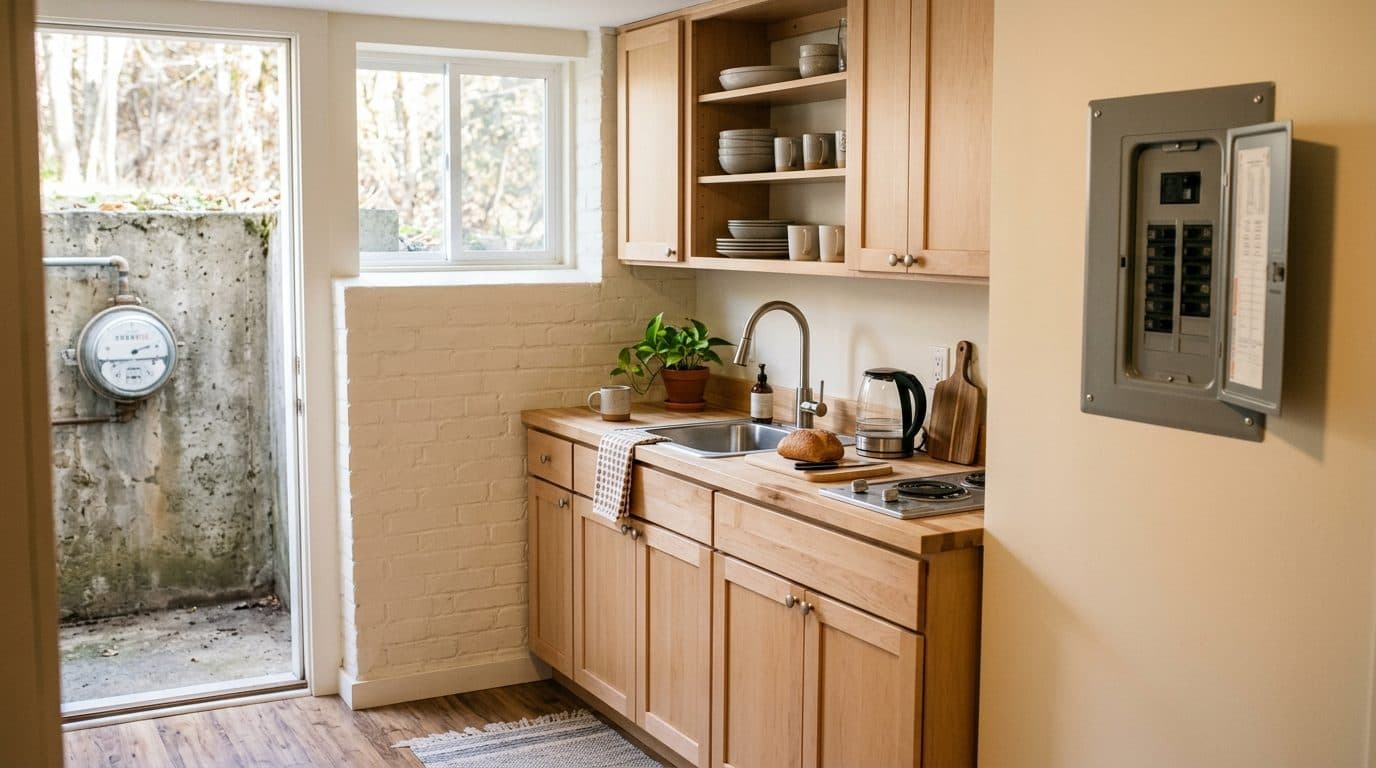
Option B — separately metered utilities. Where a basement apartment has properly installed separate metering and the applicable requirements are satisfied, the tenant may be responsible for their own consumption.
Option C — utilities shared between upstairs and basement. This one requires more care. An arrangement might establish a percentage for the basement and another for the main unit, but landlords should not simply choose an arbitrary percentage and assume it complies with Ontario law. The Residential Tenancies Act contains specific rules on the apportionment of utility costs, including information that must be given to prospective tenants where tenants are charged a portion. Verify that your proposed arrangement complies with the current Act and regulations before you implement it.
| Arrangement | How it works | What to be careful about |
|---|---|---|
| Option A — included in rent | Simple for the tenant | The landlord carries the risk of higher-than-expected consumption |
| Option B — separately metered | Where a basement apartment has properly installed separate metering and the applicable requirements are satisfied, the tenant may be responsible for their own consumption | Depends on the metering being properly installed and the applicable requirements being satisfied |
| Option C — shared between upstairs and basement | An arrangement might establish a percentage for the basement and another for the main unit | Landlords should not simply choose an arbitrary percentage and assume it complies with Ontario law; the Residential Tenancies Act contains specific rules on apportionment, including information that must be given to prospective tenants |
Is a 30/70 utility split automatically legal?
No. There is no universal rule saying the basement tenant always pays a fixed share and the upstairs occupant pays the rest. You will see various splits used in the marketplace, but the appropriate legal arrangement depends on the property, the tenancy structure, the metering and the applicable Ontario rules.
The lease should clearly identify utility responsibilities. If utilities are being apportioned rather than included in rent or separately metered, get appropriate professional advice on the permitted calculation method and the documentation you have to provide.
How much will the utilities cost?
There is no single correct monthly number. Consumption depends on the size of the house, the number of occupants, the age of the property, insulation, the heating system, air conditioning, appliances, thermostat settings, water use, the season, the municipality, electricity usage, and whether electric vehicles are being charged.
Instead of advertising a guaranteed monthly utility amount, review the property’s actual historical utility bills. Collect roughly twelve months of hydro, gas and water and calculate the property’s average monthly cost. That gives a far more realistic picture than a generic Ontario average.
Should I show previous utility bills to a prospective tenant?
Transparency prevents future disputes. Where utility costs will be shared, giving the tenant historical information helps them understand the expense they are taking on.
There is also a legal dimension: the Residential Tenancies Act contains specific disclosure requirements in certain utility-apportionment situations, including information about the applicable percentage and previous utility costs. Keep copies of the bills and document clearly whichever lawful utility arrangement you are using.
How much parking do I have to give a basement tenant?
There is no universal rule saying every basement apartment tenant must receive one or two parking spaces. Parking depends on what is included in the tenancy, the property’s available parking, municipal requirements, the driveway configuration, and the agreement between landlord and tenant.
Ontario’s Standard Lease specifically provides for the number and location of the parking spaces associated with the rental unit — so a lease can identify, for example, one driveway parking space and say exactly which space belongs to the tenant.
Can I charge my basement tenant separately for parking?
Parking can form part of the rental arrangement. The Ontario Standard Lease explains that total rent can include the base rent plus separate charges for parking or other services provided by the landlord.
Make the parking arrangements clear before signing: whether parking is included, the number of spaces, their location, any parking charge, whether the spaces are exclusive or shared, and any legitimate property-specific parking rules.
Think about tandem parking
This gets overlooked constantly. Suppose the upstairs occupant parks behind the basement tenant, and the basement tenant starts work at six in the morning. Someone is moving a vehicle every single day.
Before renting the basement, ask whether both households can come and go without constantly moving each other’s cars. Parking logistics become a major source of conflict even when the apartment itself is excellent.
What about street parking?
Do not promise a tenant permanent street parking without checking the municipality’s rules. Municipalities can restrict overnight parking, winter parking, snow routes, parking permits, maximum parking periods, and boulevard or driveway parking.
If parking matters to the tenant, verify the property’s actual parking situation before signing the lease.
Do I have to tell CRA that I am receiving basement rent?
In general, yes. If you earn income from renting real estate, including part of your own home, CRA requires the rental income to be reported. CRA states that rental income includes income earned from renting houses, apartments and rooms.
Rental property owners typically calculate their rental income and eligible expenses on Form T776, Statement of Real Estate Rentals. Reporting the income does not mean you pay tax on all of it — eligible rental expenses may reduce the net rental income that is taxable.
What basement rental expenses may be deductible?
Depending on your circumstances, a reasonable rental portion of certain expenses may be deductible: mortgage interest, property taxes, utilities, home insurance, repairs and maintenance, advertising, professional fees, and certain other expenses associated with earning rental income.
The calculation depends on how much of the home is rented and how shared areas are used. CRA’s own guidance illustrates this with a room-count allocation — a homeowner renting a set number of rooms out of the total in the residence allocates that same proportion of eligible expenses such as property taxes, electricity and insurance to the rental portion.
One distinction to get right: your entire mortgage payment is not automatically a rental expense. The interest component may qualify to the extent tax rules permit, while repayment of principal is treated differently. Speak with an accountant about your particular property.
Be careful with Capital Cost Allowance
Homeowners renting part of their principal residence should be particularly careful before claiming Capital Cost Allowance. Tax decisions involving rental use of a principal residence can have consequences when the property is eventually sold.
CRA provides specific guidance on principal residences, rental properties and CCA. Before claiming it on part of your own home, discuss the situation with a qualified accountant or tax professional.
Keep good rental records
A basement landlord should keep organized records of rent received, lease agreements, utility bills, property-tax bills, mortgage-interest statements, insurance, repairs, maintenance, advertising, professional fees and other rental-related expenses.
CRA’s Form T776 is used to calculate rental income and expenses, and good record keeping makes tax preparation dramatically easier.
Do I need to tell my insurance company?
This is the step homeowners most often skip. Before renting your basement, contact your home-insurance provider or broker and explain that part of the property will be rented.
Your insurer can determine whether your existing coverage is sufficient, whether your policy needs an endorsement, whether additional landlord coverage is required, or whether other changes are necessary. The tenant should also consider tenant insurance — Ontario’s Standard Lease allows the landlord and tenant to agree that the tenant must carry liability insurance.
Does my basement have to be a legal apartment?
Before advertising a basement as a separate apartment, investigate the applicable requirements. Depending on the municipality and the property, that can involve zoning, building permits, fire separation, smoke alarms, carbon-monoxide alarms, bedroom egress, ceiling height, electrical requirements, plumbing, entrances, parking, and registration or licensing.
Municipal rules vary considerably across Ontario. Do not assume that because a basement has a kitchen, a bathroom and a separate entrance, it is automatically a legal second unit.
Should I use the Ontario Standard Lease?
For most private residential tenancies in Ontario, yes — Ontario requires the Standard Form of Lease for most residential tenancy agreements entered into on or after the date the requirement took effect.
The lease addresses rent, parking, utilities, insurance, maintenance, smoking and additional terms. Additional terms can be attached, but they cannot remove rights or responsibilities established under the Residential Tenancies Act.
Basement landlord checklist before giving the keys
Before your tenant moves in, confirm every one of these.
- The basement’s legal status has been investigated
- Applicable municipal requirements have been checked
- The Ontario Standard Lease is completed where required
- Monthly rent is clearly stated
- Utility responsibility is clearly documented
- Any utility-sharing method has been checked for legal compliance
- Parking spaces are identified
- Snow-removal arrangements are understood
- Lawn-maintenance arrangements are understood
- Laundry arrangements are established
- Garbage and recycling procedures are explained
- Shared areas are identified
- Tenant insurance requirements are addressed
- The home insurance provider has been contacted
- Smoke and carbon-monoxide alarms have been checked
- Keys and access arrangements are established
- Emergency contact information is provided
- Rental income and expenses will be properly recorded for tax purposes
Frequently asked questions
Does my basement tenant have to shovel snow in Ontario? Do not assume the tenant automatically has that responsibility. Ontario landlords have statutory property-maintenance responsibilities, and the Court of Appeal has considered contractual attempts to transfer snow-removal obligations. Get legal advice before setting up a separate arrangement.
Does my basement tenant have to cut the grass? Do not transfer exterior maintenance through a simple lease clause. Ontario landlords have statutory maintenance responsibilities; a separate services arrangement has to be structured properly.
Can I charge my basement tenant 30% of utilities? Do not assume a percentage is permitted simply because it is common in the marketplace. Ontario has rules governing utility responsibility and apportionment, and your lease and arrangement must comply with the Act and its regulations.
Should utilities be included in basement rent? They can be. Some landlords prefer all-inclusive rent for simplicity, others establish separate responsibility. Consider consumption risk, metering, applicable law and administrative convenience.
How many parking spaces must I provide? There is no universal Ontario rule. The property’s legal parking capacity, municipal requirements and the tenancy agreement decide it, and the Standard Lease allows the number and location of spaces to be specified.
Do I have to report basement rental income to CRA? Generally yes. CRA requires rental income to be reported, and Form T776 is commonly used to calculate rental income and eligible expenses.
Can I deduct expenses if I rent my basement? Potentially. CRA allows qualifying rental expenses to be allocated between personal and rental use where appropriate; the calculation depends on the property and circumstances.
Does renting my basement affect my principal residence exemption? It can, depending on how the property is used, on structural changes, and on tax elections or claims such as CCA. The consequences can be significant, so discuss your circumstances with a qualified tax professional.
Final thoughts
Renting your basement can be a valuable way to generate income and manage the cost of homeownership. But the monthly rent is not monthly profit, and treating it that way is how first-time landlords get caught out.
A responsible Ontario landlord thinks about legal compliance, tenant screening, the lease, utilities, parking, maintenance, insurance, taxes and the long-term implications for the property — together, not one at a time. Setting those expectations correctly before the tenant moves in prevents most of the problems that come later.
But the monthly rent is not monthly profit, and treating it that way is how first-time landlords get caught out.
Written by
Robin PatelSalesperson · The Agency Toronto
Updated
Published
Read in your language
A machine translation, not Robin’s words. For anything that decides money, ask him in Gujarati or Hindi directly.