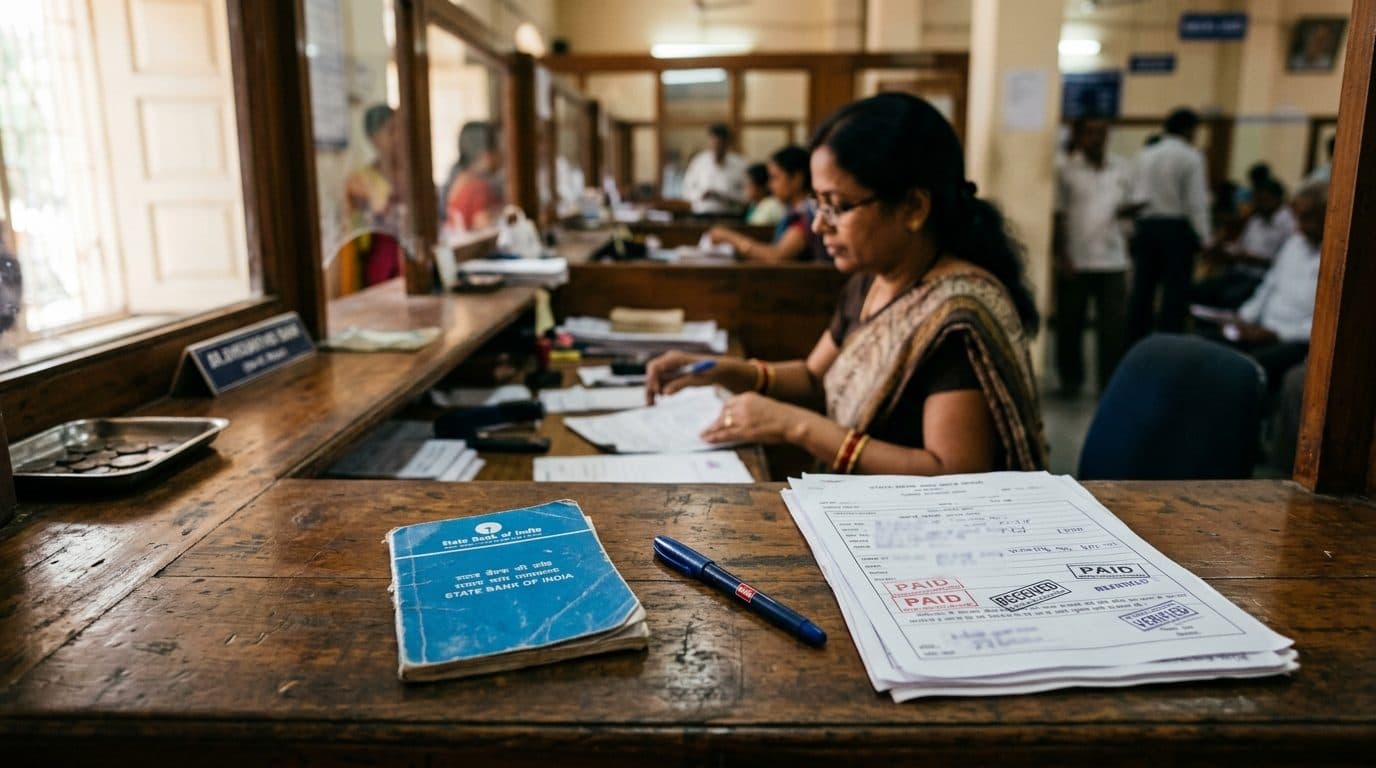
How to Transfer Money From India to Canada for a Home Down Payment
You can generally move funds from India to Canada toward a down payment — but the lender’s question is not whether the money arrived, it is whether you can document where it came from. Plan it before the offer, not after.
The short answer
Money held in India can generally be transferred to Canada toward a down payment, and documentation of its legitimate source is what decides whether it goes smoothly. India’s remittance and Tax Collected at Source rules also mean more is debited than the amount you intend to send, which is why Robin Patel starts that conversation months before an offer.
Written forGujarati, Indian and other first-time home buyers in Ontario whose down payment, in whole or in part, is coming from India.
The short version
- The lender’s question is not whether the money can enter Canada — it is whether you can document its legitimate source to your bank, your lender and your lawyer.
- Establish first whether the money is your own savings, a parental gift or proceeds from an Indian property sale; the required documentation is different for each.
- A gift needs a gift letter confirming it is not repayable and that the donor has no ownership interest. Never describe a loan as a gift to satisfy a lender.
- India’s Liberalised Remittance Scheme, form requirements and Tax Collected at Source mean the amount debited in India is not the amount you send — ask the Indian bank what will actually leave the account.
- Do not split a large transfer into smaller ones to avoid reporting, and do not let the funds land in your Canadian account days before closing.
Can I use money from India for a down payment on a house in Canada?
Yes — in many situations, money held in India can be transferred to Canada and used toward the purchase of a home. For first-time home buyers, the biggest mistake is waiting until the last minute to move the money.
The key issue is not simply whether the money can enter Canada. The important question is whether you can document the legitimate source of the funds to satisfy your Canadian bank, your mortgage lender and your real estate lawyer. Your lender, lawyer and bank may need to understand where the money came from, who owns it, whether it is a gift or your own money, and how it moved from India to Canada.
The money could come from your personal savings in India, your parents’ savings, a gift from parents or other eligible family members, proceeds from the sale of property in India, proceeds from investments or other assets, funds accumulated before moving to Canada, or another legitimate and documented source. The documentation required varies depending on which one it is.
The first question: whose money is it?
Before transferring anything, establish which of three situations you are actually in, because the paperwork is different for each.
If it is your own money — for example, savings in an Indian bank account you want to transfer to your Canadian account — be prepared to show Indian bank statements, the source of those savings, employment or business income records where applicable, investment statements, tax records where appropriate, and proof of the transfer into Canada.
If it is a gift from your parents, which is common among first-time home buyers, the flow is: parents in India, gifting money to a Canadian first-time home buyer, applied to the down payment. In Canada, a genuine personal gift is generally not treated as taxable income to the recipient. However, your mortgage lender may require a gift letter and supporting documentation confirming that the money is genuinely a gift and does not have to be repaid. Do not assume that because the money is a gift, you do not need documentation.
If it is money from selling property in India, this situation requires additional care. You may need documentation showing ownership of the property, the sale agreement, the sale proceeds, bank statements, tax records, evidence of the money entering your Indian bank account, and documentation supporting the legal transfer of the funds to Canada. Indian rules concerning the transfer of proceeds from Indian assets can be complicated, particularly depending on your residency status and the type of asset, and the Reserve Bank of India has specific rules concerning the repatriation of proceeds from certain assets.
Do not wait until you have an accepted offer
One of the biggest mistakes first-time buyers make is transferring the money after they already have an accepted offer.
Ideally, discuss the transfer with your mortgage broker or lender, your Canadian bank, your real estate lawyer and your Indian bank or remittance professional before you move a large amount.
Why? Because your lender may need to verify the down payment before approving your mortgage, and your lawyer may need to receive certified funds by the closing deadline. A delay in moving money creates unnecessary stress when you are already working under a firm closing date.
Keep a clear paper trail
This is one of the most important rules. If you are transferring a large amount from India to Canada, keep documentation showing where the money started, who owned it, how it was transferred and where it arrived.
A typical chain runs: the parent’s Indian bank account, to the Indian bank or remittance provider, through an international wire transfer, into the buyer’s Canadian bank account, and then to the Canadian real estate lawyer’s trust account. Every one of those steps should have a document behind it.
Keep copies of all of it:
- Indian bank statements and Canadian bank statements
- Wire transfer receipts
- Foreign exchange and remittance receipts
- The gift letter, if applicable
- Sale documents, if applicable
- Investment statements, if applicable
- Tax documentation
- Identification documents requested by the bank
- Any correspondence from the bank regarding the transfer
What if my parents are giving me the down payment?
This is one of the most common questions from first-time home buyers. If your parents in India are providing money as a genuine gift, tell your mortgage professional early.
Your lender may request a gift letter confirming that the money is being given voluntarily, that it is intended to help with the home purchase, that it does not have to be repaid, and that the donor has no ownership interest in the Canadian property. Your lender may also request evidence of the donor’s financial ability and of the movement of the funds.
A gift is different from a loan. Do not describe borrowed money as a gift simply to satisfy mortgage requirements. If the money is actually a loan, tell your mortgage professional it is a loan.
What about India’s LRS rules?
If the money is being sent from an Indian resident’s account, Indian foreign-exchange rules need to be considered. The Reserve Bank of India’s Liberalised Remittance Scheme generally allows resident individuals to remit up to a specified limit per financial year for permitted transactions, subject to the applicable rules and documentation.
One detail that catches families planning a large transfer: the financial year for LRS purposes is India’s financial year, not the calendar year — so the limit resets on a different date than you may expect, and a transfer planned across a year end may or may not straddle two limits.
If more than one family member is involved, do not assume that you can simply split a transaction between accounts to avoid the regulatory requirements. Ask the authorized Indian bank or remittance provider how the rules apply to your specific circumstances.
Watch for TCS on Indian remittances
One of the most important issues when transferring money from India is Tax Collected at Source. Indian tax rules can require an authorized dealer to collect TCS on certain outward remittances under the LRS, above a threshold and at a rate that both depend on the purpose of the remittance and the rules in force at the time of the transfer.
The practical consequence is that the amount debited from the Indian account is not the amount you intend to send. Do not calculate your required down payment based only on the figure you plan to remit.
Ask your Indian bank or your Indian tax professional directly: how much will actually be debited from my Indian account, including applicable TCS, fees and foreign-exchange costs? This matters most when you have a fixed closing amount to meet.
The practical consequence is that the amount debited from the Indian account is not the amount you intend to send.
TCS is not a Canadian tax on your down payment
This distinction is important and it is frequently confused. If money is transferred from India to Canada, there can be Indian tax and remittance considerations — but that does not automatically mean the down payment itself becomes taxable income in Canada. A genuine personal gift is generally not taxable to the recipient in Canada.
However, the source of the money and the transaction behind it still matter. A gift from parents is different from employment income. Sale proceeds from an Indian property are different from a gift. Investment proceeds are different from savings. A loan is different from a gift.
Always keep the source-of-funds documentation, whichever of those it is.
Will the Canadian bank ask where the money came from?
It can. Canadian financial institutions have obligations relating to financial transactions and anti-money-laundering requirements, and international electronic funds transfers above a prescribed amount can trigger reporting requirements for reporting entities, including aggregation under the applicable rules.
This does not mean that transferring a large sum is illegal. It means you should expect legitimate financial institutions to have reporting and verification obligations, and to exercise them.
Do not try to avoid reporting by making multiple smaller transfers. If you are moving a large amount of money, use a legitimate banking or remittance channel and keep a complete paper trail.
Where to send it, and how long it should sit
In many cases, buyers transfer the money into their Canadian bank account well before closing — India to the Canadian bank account, then to the Canadian lawyer — rather than waiting until the last minute. The exact process should be coordinated with your mortgage lender and your real estate lawyer, who will tell you how and when the down payment and closing funds must be delivered.
There is no universal number of days that applies to every buyer or lender. The important point is to give your mortgage lender enough time to verify the funds. If your down payment suddenly appears in your Canadian account immediately before closing, your lender may ask additional questions or request additional documentation.
The better approach is to plan early. If you know you are going to buy a home in the next few months, speak to your mortgage professional before transferring a large amount.
What documents should first-time home buyers keep?
A useful document package depends on where the money came from. Your lender, bank or lawyer may request more.
- If it is your own money: Indian bank statements, investment statements, employment and income records, tax documents, sale documents if applicable, wire-transfer receipts, and Canadian bank statements.
- If it is a parental gift: the gift letter, the parent’s Indian bank statements, proof of the source of the funds, the wire-transfer confirmation, and the Canadian bank statement showing receipt.
- If the money came from selling Indian property: property ownership documents, the sale agreement, sale proceeds documentation, the Indian bank statement, the applicable tax documentation, and the remittance documentation.
| Where the money came from | Documents to keep |
|---|---|
| Your own money | Indian bank statements, investment statements, employment and income records, tax documents, sale documents if applicable, wire-transfer receipts, and Canadian bank statements. |
| A parental gift | The gift letter, the parent’s Indian bank statements, proof of the source of the funds, the wire-transfer confirmation, and the Canadian bank statement showing receipt. |
| Sale of Indian property | Property ownership documents, the sale agreement, sale proceeds documentation, the Indian bank statement, the applicable tax documentation, and the remittance documentation. |
The seven mistakes that cause the problems
Every difficult source-of-funds file Robin has seen involved at least one of these:
- Waiting until closing. International transfers take time. Plan ahead.
- Calling a loan a gift. If you have to repay the money, disclose that it is a loan.
- Not keeping Indian bank statements. Do not assume your Canadian bank will never ask for them.
- Moving money through someone else’s account without documentation. The cleaner the source-of-funds trail, the easier the verification.
- Using cash. Avoid unnecessary cash transactions — a transparent banking trail is far easier to document.
- Ignoring Indian tax rules. Canadian home buyers sometimes focus only on the Canadian requirements. The money is leaving India, so Indian FEMA, LRS, TCS and tax rules may also matter.
- Assuming every bank has the same requirements. Mortgage lenders, banks and lawyers can have different documentation requirements. Ask before transferring the money.
What the sequence looks like in practice
Imagine a first-time home buyer in Ontario purchasing a home, with part of the down payment already saved in Canada and the parents in India providing the rest.
A simplified process runs: the parents’ Indian bank account, then confirming the Indian remittance requirements, then transferring through an authorized banking or remittance channel, then the money arriving in the Canadian account, then providing documentation to the mortgage lender if requested, then the Canadian lawyer receiving the required closing funds, and then the purchase closing.
The exact documentation and tax treatment will depend on the family’s circumstances — but the order does not change, and every step before the last one happens long before closing week.
The seven-step pre-transfer checklist
Before you send anything, work through this in order:
- Speak with your mortgage broker or lender.
- Tell your lawyer that some or all of the down payment is coming from India.
- Determine whether the money is your own funds, a gift, a loan or proceeds from an asset sale.
- Ask the Indian bank about LRS, TCS, FEMA and the required forms.
- Confirm the exact Canadian-dollar amount you need for the down payment and the closing costs.
- Keep complete documentation of the source and the transfer of the funds.
- Transfer the money early enough for your lender and your lawyer to verify it.
Frequently asked questions
Can I bring money from India to Canada for my first home? Generally, yes. The transfer must comply with the applicable Indian foreign-exchange and tax rules and with Canadian banking requirements.
Can my parents in India give me money for a Canadian home down payment? A genuine family gift can generally be used toward a down payment, subject to your mortgage lender’s requirements and proper documentation.
Is gifted money taxable in Canada? A genuine personal gift is generally not taxable income to the recipient in Canada. Other tax considerations can arise depending on the circumstances and the source of the money.
Can I transfer money from India directly to my Canadian bank account? The transfer can generally be made through an authorized banking or remittance channel, subject to the applicable Indian rules and documentation.
How much money can I send from India to Canada? For Indian residents, the LRS framework generally permits remittances up to a specified limit per financial year for permitted transactions, subject to the applicable rules. Confirm the current limit with the authorized dealer before you plan around it.
Will the Canadian bank ask where my down payment came from? It may. Be prepared to provide documentation showing the source and the movement of the funds.
Can I split a large transfer into smaller transactions? Do not split transactions simply to avoid reporting or verification requirements. Use a legitimate transfer method and follow the applicable rules.
Should I transfer the money before making an offer? Not necessarily. But if you know your down payment will come from India, it is smart to discuss the process with your mortgage professional and your lawyer before you make an offer or move a large amount of money.
The final takeaway
Bringing money from India to Canada for a home down payment is possible. What decides whether it goes smoothly is the paperwork, and the paperwork has to start months before the offer.
The safest approach, in order: know the source, verify the Indian requirements, use a legitimate transfer channel, keep the paper trail, disclose the funds to your mortgage professional, coordinate with your lawyer, and transfer early.
If you are a Gujarati or Indian first-time home buyer in Ontario, do not wait until you have an accepted offer to ask these questions. Your mortgage professional, your Canadian real estate lawyer and a qualified Indian tax or remittance professional should work together so that your down payment is properly documented and available when you need it.
Written by
Robin PatelSalesperson · The Agency Toronto
Updated
Published
Read in your language
A machine translation, not Robin’s words. For anything that decides money, ask him in Gujarati or Hindi directly.