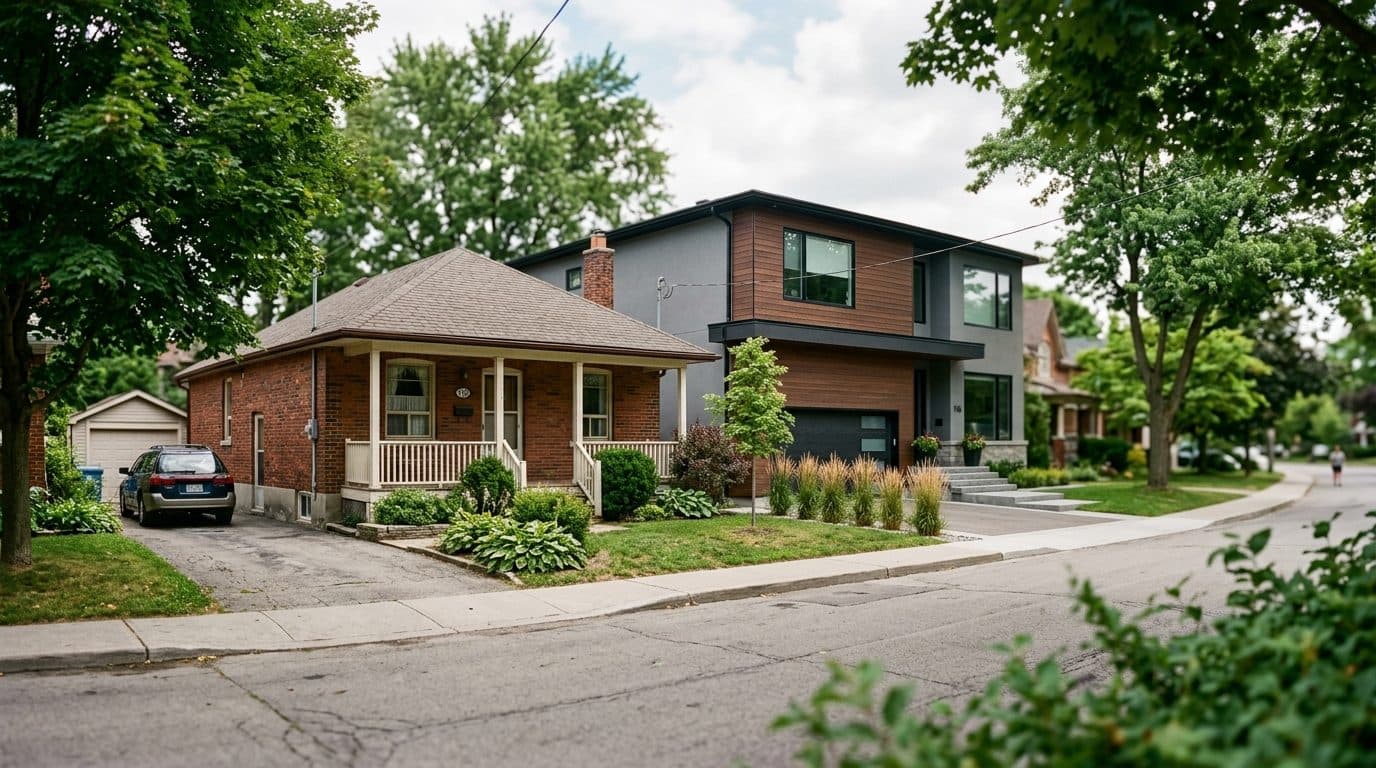
How the Canadian Homeowner Has Changed: 50 Years of Homeownership, Buyer Age and Housing Preferences
Why comparing your first home to your parents’ first home is misleading — how the age, the property type and the path into ownership have all shifted, and what that means for a GTA buyer today.
The short answer
Canada’s homeownership rate peaked at the 2011 census and has fallen at every census since, according to Statistics Canada, with the sharpest decline among households headed by someone aged 25 to 39. That context is what Robin Patel gives GTA first-time buyers, because comparing your purchase with your parents’ measures a market that no longer exists.
Written forFirst-time buyers across the GTA and surrounding Ontario who are wondering whether they are behind, and move-up buyers deciding what their next property should be.
The short version
- Statistics Canada does not publish an average homeowner age — it reports ownership by the age of the primary household maintainer, the person mainly responsible for the housing payments.
- Canada’s homeownership rate rose from the 1970s to a peak at the 2011 census and has fallen at every census since.
- The decline is concentrated in households headed by someone aged 25 to 39, and it is sharper still in the Toronto area, where fewer than half of that age group owned by 2021.
- Detached houses remain the largest single category of Canadian housing, but in expensive markets the first purchase is far more often a condo or townhouse.
- Comparing your first purchase to your parents’ first purchase is misleading: prices, mortgage rules, household structures and the available housing mix have all changed.
- Your first home does not have to be your forever home — it has to be affordable, suitable and a step you can build equity from.
The dream has not changed. The path has.
Homeownership in Canada has changed dramatically over the past five decades. The dream of owning a home is still very much alive, but the age at which Canadians buy, the type of property they purchase, where they buy and how long it takes them to enter the market have all evolved.
In the 1970s and 1980s, many Canadian families associated homeownership with a detached house, a backyard and suburban living. Today, especially in expensive markets such as the Greater Toronto Area, a first home could just as easily be a condominium, a townhouse or a smaller property farther outside the urban core.
For today’s buyer, the question is often no longer simply “what kind of house do I want?” It has increasingly become “what can I comfortably afford while still achieving my long-term goals?” Understanding how homeownership has actually shifted is what stops a buyer measuring their own position against a market that no longer exists.
What is the average age of a homeowner in Canada?
There is an important distinction to make first. Statistics Canada does not typically publish one simple number called the “average age of a Canadian homeowner.” Instead, housing statistics are generally categorized according to the age of the primary household maintainer — essentially the person identified as mainly responsible for housing payments such as the mortgage, property taxes, rent or utilities.
What the census data clearly shows is that homeownership becomes considerably more common as Canadians move through their 30s, 40s, 50s and 60s. The rate is lowest among the youngest households, rises steeply through the middle decades of life, and is highest among households maintained by someone in their late fifties through their seventies.
That tells us something more useful than a single average age: homeownership is increasingly concentrated among middle-aged and older Canadians, while younger households face greater challenges entering the market.
What age are today’s first-time home buyers?
First-time buyers are younger than the overall homeowner population. CMHC’s Mortgage Consumer Survey has consistently found that most first-time buyers surveyed are in their late twenties and early thirties.
That does not mean every Canadian buys their first home before thirty-five. In expensive markets such as Toronto and the GTA, many buyers purchase later because they need additional time to build their down payment, establish their career, improve their income, pay down other debt, qualify for a larger mortgage, buy with a spouse or partner, receive family assistance, or consider communities farther from Toronto.
That delayed entry into homeownership is becoming an important feature of the modern Canadian housing market.
Fifty years of Canadian homeownership
Canada’s overall homeownership rate rose steadily from the 1970s through the early 2010s, reached its peak at the 2011 census, and has declined at each census since. Statistics Canada’s census series is the source for that arc, and the shape of it matters more than any single year.
For several decades, homeownership became more widespread. Younger Canadians are now encountering a very different affordability environment than many previous generations experienced.
The change is even greater for younger homeowners
Between the 2011 and 2021 censuses, the homeownership rate fell for households headed by someone aged 25 to 39 and for the 40-to-54 band, held close to level for the 55-to-74 band, and rose for households maintained by someone 75 or older (Statistics Canada, Census of Population, 2011 and 2021).
That pattern explains an important generational shift. Older Canadians continue to hold a large share of Canada’s owner-occupied housing, while younger households are finding it increasingly difficult to reach homeownership at the same stage of life.
The trend is even more noticeable in Toronto
The difference becomes particularly apparent in the Toronto metropolitan area. Among Toronto-area households headed by someone aged 25 to 39, the homeownership rate declined at each of the last three censuses, and by 2021 fewer than half of households in that age group were homeowners. Toronto households in the 55-to-74 band, by contrast, remained overwhelmingly owners.
For today’s first-time buyer, this helps explain why comparing yourself with someone who bought their first house twenty or thirty years ago can be misleading. The housing market itself has changed.
What kind of homes did Canadians buy fifty years ago?
Detached houses historically played an even larger role in Canadian housing than they do now. The single-detached share of occupied dwellings was at its highest in the 1971 census and has drifted downward across the decades since, with only small reversals along the way.
The detached house certainly has not disappeared. It remains Canada’s largest individual housing category by a wide margin. But the housing mix is gradually becoming more diverse.
1970s: the traditional detached-home era
For many families during the 1970s, the housing objective was relatively straightforward: buy a detached family house and gradually pay off the mortgage. Canadian suburbs were expanding rapidly, land availability around many cities was greater than today, and detached houses made up a substantial portion of the national housing stock.
The typical homeowner’s priorities revolved around enough bedrooms for the family, a yard, nearby schools, parking, stable employment nearby and long-term ownership. A house was primarily somewhere to raise a family rather than something that needed to satisfy every lifestyle consideration.
1980s: detached homes and expanding suburbs
Suburban expansion continued throughout the 1980s. Families increasingly moved outward from Canada’s major downtowns into communities offering larger houses, garages, larger lots, schools, parks and growing highway networks.
Detached houses remained dominant. For many buyers, purchasing farther from a downtown employment centre was an acceptable compromise in exchange for more house and more land.
1990s: the rise of the move-up buyer
By the 1990s, homeownership became increasingly connected with wealth accumulation. Families often followed a relatively predictable housing ladder: starter home, then a larger detached home, then eventual mortgage-free ownership.
Townhouses, condominiums and semi-detached homes were already important parts of Canadian housing, particularly in larger cities, but the detached suburban house remained the major aspiration.
2000s: homeownership accelerates
The early 2000s marked a significant period for Canadian homeownership, with the national ownership rate climbing through the decade toward its 2011 peak.
During this era, rapid metropolitan growth increased demand for multiple housing types. Condos became an increasingly important entry point into markets such as Toronto. Townhouses and semi-detached properties also became common compromises between condominium living and detached ownership.
2010s: affordability starts changing the conversation
As property values increased dramatically in cities such as Toronto and Vancouver, buyer priorities began shifting. Instead of asking “can I buy a detached house?”, many buyers increasingly asked “where can I afford to become a homeowner?”
That change encouraged buyers to consider condos, condo townhouses, freehold townhouses, semi-detached homes, smaller detached homes, homes requiring renovation, and communities farther outside Toronto. The growing price difference between property types became increasingly important for first-time buyers.
2020s: affordability, flexibility and lifestyle
Today’s home buyer has a much broader set of priorities. Price is certainly important, but modern buyers also weigh a long list of practical factors, and the modern definition of the ideal home has become much more flexible as a result.
- Mortgage affordability
- Commuting time
- Work-from-home arrangements
- Proximity to highways and GO Transit
- Multigenerational living
- Basement potential
- Rental potential
- Energy efficiency
- EV charging
- Maintenance requirements
- Condominium fees
- Proximity to schools
- Future development
- Lifestyle amenities
- Future resale potential
What types of homes do Canadians live in today?
The 2021 Census breaks Canada’s occupied private dwellings into single-detached houses, semi-detached houses, row houses and townhouses, apartments in a duplex, apartments in buildings under five storeys, and apartments in buildings of five storeys or more.
Single-detached houses remain by far the largest single category, but apartments, condos, townhouses and other forms of higher-density housing together represent a substantial portion of Canadian housing.
Do Canadians still prefer detached houses?
Generally, yes. CMHC’s mortgage-consumer research finds that a clear majority of respondents had a single-detached property when buying, renewing or refinancing, with condos, semi-detached homes and row houses or townhouses making up the remainder in much smaller shares.
CMHC also notes that property choice varies significantly by location. Buyers in expensive markets such as Toronto and Vancouver are more likely to enter the market through a condo, townhouse or similar housing form because of land availability and affordability.
This leads to an important distinction: what Canadians prefer and what Canadians ultimately purchase are not always the same thing. Many buyers may still dream of a detached house. Affordability determines the first step.
The new housing ladder
The traditional housing ladder once looked like this: rent, then a starter detached home, then a larger detached home, then a paid-off family home.
For many GTA buyers today it may look more like: rent, condo, townhouse, semi-detached, detached. Or: rent in Toronto, then buy a townhouse or detached home outside Toronto. Or even: live with family, save a larger down payment, purchase a multigenerational home.
There is no longer one correct path. The most important issue is whether the property fits the buyer’s financial situation and long-term objectives.
Why are Canadians buying homes later?
Several factors are contributing to delayed homeownership, and they compound on each other.
- Higher home prices. Housing prices have risen significantly over several decades, particularly in major metropolitan regions, so buyers need significantly larger down payments.
- Mortgage qualification. Buyers must qualify based on their income, debts, interest rates and Canada’s mortgage qualification requirements, and higher payments reduce purchasing power.
- Larger down payments. Saving the required percentage of today’s GTA property values simply takes longer than it used to.
- Longer education. Many Canadians spend more years completing university, graduate school or professional training before establishing full-time careers.
- Later marriage and family formation. Some buyers wait until they are purchasing with a spouse or partner before entering the market.
- Lifestyle flexibility. Younger Canadians may prioritize flexibility, career changes, travel or mobility before buying.
- High-cost urban markets. A buyer determined to remain in Toronto faces a very different affordability equation from someone willing to move to Hamilton, Kitchener-Waterloo, Guelph, Barrie, Brantford or another surrounding Ontario market.
Detached, semi, freehold town, condo town, condo: how preferences are changing
Today’s buyers increasingly evaluate property type according to affordability and lifestyle rather than prestige. Each form carries a different trade-off.
Detached houses remain attractive because they may provide more privacy, larger yards, more interior space, potential basement space, no shared walls and greater renovation flexibility. Buyers generally need a larger budget and should expect higher maintenance costs.
Semi-detached properties can provide many features of a detached house at a potentially lower purchase price. For GTA first-time buyers, they often represent an attractive middle ground.
Freehold townhouses have become popular because they may offer multiple bedrooms, a garage, backyard space, efficient use of land, and in many cases no traditional condominium maintenance fee.
Condo townhouses may offer more space than an apartment condominium while maintaining a lower entry price than many freehold properties. Buyers must carefully evaluate condominium fees and the corporation’s financial health.
Condominiums remain an important entry point into homeownership, especially in Toronto and other high-density markets. They may appeal to buyers prioritizing location, transit, lower exterior maintenance, amenities, security and urban lifestyle. Buyers should consider monthly condo fees, reserve-fund health and building management.
Location has become part of the property decision
Perhaps the biggest change in today’s housing market is that buyers increasingly choose location and property type together rather than separately. The same approximate budget might buy a condo in Toronto, a condo or townhouse in Mississauga, a townhouse or semi or smaller detached property in Brampton depending on the neighbourhood, a townhouse or semi in Milton, potentially more space in Kitchener-Waterloo, or a different mix again in Hamilton.
Those are examples rather than guarantees, because prices constantly change. The correct question is therefore not “where can I buy the biggest house?” It is “which combination of location, property type, monthly payment and lifestyle makes the most sense for me?”
One-person households are also changing housing demand
Another major demographic shift is household size. The 2021 Census found that one-person households now make up a substantial share of Canadian private households, with two-person households making up an even larger share, and the average household size continuing to fall.
This has important implications for future housing demand. Not every household needs or wants a four-bedroom detached house. Smaller households can increase demand for condos, smaller homes, bungalows, townhouses, accessible housing and communities close to services and amenities.
Older homeowners will shape Canada’s next housing cycle
One of the most important future housing trends may come from older homeowners. Many Canadians aged 55 and over already own homes. Over the coming decades, some will remain in their existing homes, renovate to age in place, downsize, move into condominiums, move closer to children, relocate to smaller communities, or transfer housing wealth to the next generation.
That could influence both housing supply and the ability of younger Canadians to purchase. Intergenerational wealth will likely become increasingly important in the Canadian housing market.
What this means for first-time home buyers
One of the biggest mistakes a first-time buyer can make is comparing their first purchase directly with their parents’ or grandparents’. Prices, mortgage rules, household structures and the housing options available have all moved since, and they have not moved together.
Instead of assuming your first home must be your forever home, consider whether it can simply be your first strategic step into homeownership. A condo, townhouse or smaller property may allow you to begin building equity while maintaining a manageable monthly payment. You may eventually move into another property as your income, family and equity change.
Robin’s perspective
Robin does not believe the goal should automatically be the largest property a lender will approve. The property has to make sense on affordability, on location, on the commute and on what the household will need in five years — and those four are usually where the largest approved number falls apart.
Sometimes the right decision is a condo in Toronto. Sometimes it is a townhouse in Mississauga. Sometimes it is a semi-detached property in Brampton. And sometimes it makes sense to look farther into communities such as Kitchener-Waterloo, Hamilton, Guelph or Barrie, where your budget may purchase a different type of property. There is no universal answer. A good real estate strategy starts with understanding the buyer, not simply finding the biggest house.
Frequently asked questions
What is the average homeowner age in Canada? There is no single official Statistics Canada figure commonly reported as the average homeowner age. Statistics Canada generally analyzes homeowners according to the age of the primary household maintainer, and homeownership is substantially higher among Canadians aged 40 and older than among younger households.
What age do most Canadians buy their first home? Many first-time buyers are in their late twenties and early thirties, which is what CMHC’s mortgage consumer research consistently finds. First-time purchasing age varies considerably according to city, income, household composition and housing prices.
Are Canadians buying homes later than previous generations? There is strong evidence that younger households face greater difficulty entering homeownership. The ownership rate among households headed by someone aged 25 to 39 fell between the 2011 and 2021 censuses.
Is homeownership declining in Canada? Canada’s homeownership rate peaked at the 2011 census and has declined at each census since.
Do Canadians still prefer detached homes? Detached houses remain highly desirable, but affordability and geography increasingly determine what buyers actually purchase. Condos and townhouses are particularly important entry-level options in expensive metropolitan markets.
Is buying a smaller property a bad investment? Not necessarily. Your first property does not have to be your largest property or your forever home. Location, purchase price, monthly carrying costs, building condition, future supply, neighbourhood demand and your expected holding period may matter more than the property type itself.
The bottom line
Over the past fifty years, Canadian homeownership has evolved from a market dominated even more heavily by detached family housing toward a much broader mix of detached houses, townhouses, semi-detached properties and apartments. At the same time, younger Canadians are finding it harder to become homeowners.
Today’s successful home buyer may therefore need to think differently from previous generations. The first home does not need to be perfect. It needs to be affordable, suitable and strategically aligned with your future.
The first home does not need to be perfect.
Written by
Robin PatelSalesperson · The Agency Toronto
Updated
Published
Read in your language
A machine translation, not Robin’s words. For anything that decides money, ask him in Gujarati or Hindi directly.