Chhath Puja & Real Estate: What Water, Parks and Gathering Space Are Worth
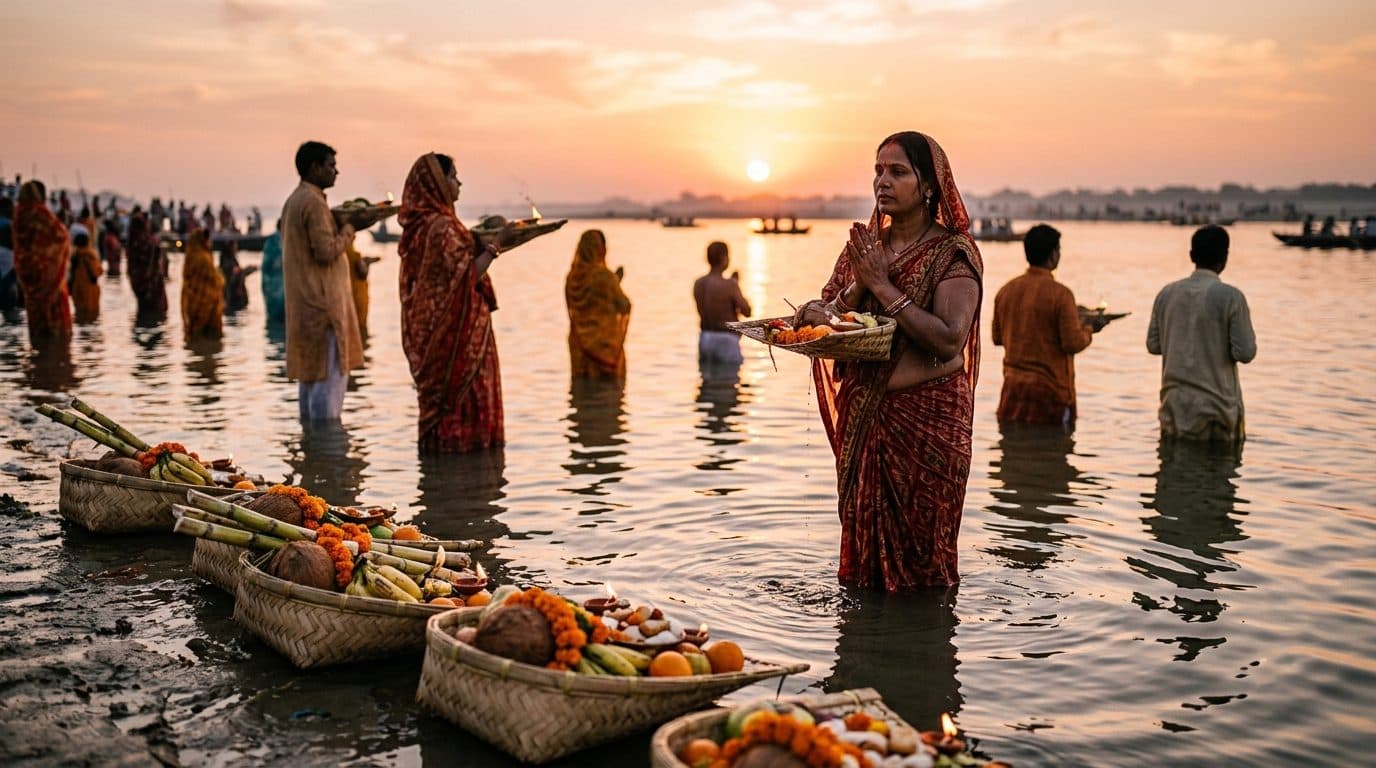
Chhath is observed standing in water at sunset and again at sunrise. For a growing number of GTA families that turns an abstract question — how much is green space worth? — into a very concrete one about where they should buy.
The short answer
Green space you can see is not green space you can reach: a fence without a gate, an arterial road or a rail corridor often sits between a backyard and the park behind it. The question a family brings Robin Patel is rarely about the festival and almost always about geography, so the test is the walk, not the view.
Written forBihari, Jharkhandi and Purvanchali families settling in the GTA, and any buyer weighing what proximity to parks, water and community space is actually worth.
The short version
- Green space you can see is not green space you can reach — walk the route from the front door, timed, with the slowest walker in the family, before you decide the park counts.
- Open land beside a subdivision may be a future development block. The municipal zoning by-law and official plan land-use schedule are searchable by address and settle it in about twenty minutes.
- Land near a creek or ravine generally sits in a conservation authority regulated area, where a deck, pool, shed, addition or regrading can require a permit — check before conditions come off, not after.
- Community centres, halls and places of worship are housing infrastructure for a lot of families, and their locations barely change. Map them before choosing an area.
- Living directly across from a destination park brings event parking, weekend traffic and noise. The street one block back is often the better trade — but choose it deliberately.
What Chhath Puja is
Chhath Puja is a four-day observance dedicated to Surya, the sun, and to Chhathi Maiya. It is kept most widely by families from Bihar, Jharkhand, eastern Uttar Pradesh and the Terai, and falls in the month of Kartik a few days after Diwali — usually late October or November, on a different date each year.
The four days run in sequence: a first day of bathing and a simple meal; Kharna, when the fast is broken in the evening and a long fast without food or water begins; the evening arghya, offered to the setting sun while standing in water; and the morning arghya at sunrise, after which the fast ends. Offerings are carried in bamboo soop and baskets, and thekua, fruit and sugarcane are prepared at home.
Two things about Chhath matter for a page like this one. It is one of the few observances centred on the setting sun as much as the rising one, and it needs no temple or priest — it needs water, open sky at the right hours, and a community organized enough to gather there. In the GTA that means lakefront and riverside parks, and the associations that book and clean them.
Robin is Gujarati, and Chhath is not his festival to claim. What he can answer is the question a Bihari or Purvanchali family actually brings him, which is rarely about the festival and almost always about geography: where do we buy so that this is a fifteen-minute drive and not a fifty-minute one?
Water is not decoration
Most listing copy treats water as a view. For a lot of families it is infrastructure — somewhere you actually stand, before dawn, in late autumn, with elderly parents and small children and a car full of baskets. That reframes the search. You are not looking for a lake view. You are looking for a shoreline or riverbank with a parking lot that holds more than a dozen cars, a path a seventy-year-old can walk in the dark, washrooms open at that time of year, and a municipality that permits a group gathering there.
The GTA has more of this than newcomers expect. Lake Ontario runs along the south edge of Mississauga and Toronto; the Credit River through Mississauga, Brampton and Caledon; Etobicoke Creek and Chinguacousy Park sit in the middle of Brampton; Sixteen Mile Creek runs through Milton and the Grand River through Kitchener and Waterloo. Which of those is realistic depends entirely on which side of your city you buy on — a decision made once, at purchase, and lived with for years.
| Water or open space | Where it runs |
|---|---|
| Lake Ontario | Along the south edge of Mississauga and Toronto |
| The Credit River | Through Mississauga, Brampton and Caledon |
| Etobicoke Creek and Chinguacousy Park | In the middle of Brampton |
| Sixteen Mile Creek | Through Milton |
| The Grand River | Through Kitchener and Waterloo |
The park you can see versus the park you can reach
Standing in a backyard looking at green space feels like proximity. Often it is not. Between many GTA subdivisions and the park behind them there is a fence with no gate, a six-lane arterial with a crossing half a kilometre away, a stormwater pond that is not a park at all, or a rail corridor.
The test is not the view from the deck. It is the walk. Do it once, on foot, from the front door of the house you are considering, with whoever in your family walks slowest, and time it. That number is the real one, and it is frequently three times what the listing implies. Do the same for the drive: a shoreline eleven kilometres away is a different proposition depending on whether those kilometres are a quiet road before dawn or Highway 401 at 6 p.m.
One more trade-off worth naming. Being directly across from the big park is not automatically the best outcome — destination parks bring event parking on your street, weekend traffic and evening noise, and some municipalities apply permit parking rules that affect your own guests. For many families that is a fair trade. For others the better answer is the street one block back. Choose it deliberately rather than discover it in July.
Green space that stays green
Not every open field beside a new subdivision is a park. Some is a future development block, some is a school site the board has not built on, some is a utility corridor, and some is genuinely protected. You can find out. Every Ontario municipality publishes a zoning by-law and an official plan with mapped land-use designations, both searchable by address. Land shown as open space, natural heritage or environmental protection is in a very different category from land shown as residential and simply not built on yet.
This is a twenty-minute check that survives the entire time you own the house. If the reason you are paying more for a particular lot is the field behind it, spend the twenty minutes.
- Search the municipal zoning by-law map for the property and for the land beside it.
- Check the official plan land-use schedule, which shows what land is planned to become, not only what it is.
- Look for an active development application on the municipality’s planning portal for any adjacent block.
- Check whether the land falls inside a conservation authority regulated area.
- Ask the listing agent in writing what is planned behind the property — and do not treat a verbal answer as the check.
Ravine and floodplain lots: the unglamorous part
A ravine lot backing onto a creek is exactly the kind of property a family drawn to water tends to fall for. Buy one with your eyes open. Land near a watercourse in this region generally sits inside an area regulated by a conservation authority — depending on the watershed, the Toronto and Region Conservation Authority, Credit Valley Conservation, Conservation Halton or the Grand River Conservation Authority. Inside a regulated area, work you would take for granted can require a permit: a deck, a pool, a shed, an addition, a fence, regrading, sometimes removing vegetation.
Slope stability matters too. Some ravine lots carry a defined top-of-bank and a setback within which you simply cannot build. Where a property is in or near a mapped floodplain, insurance for overland water can be harder to obtain or more expensive, and a lender may ask questions.
None of this makes a ravine lot a bad buy — plenty are the best lots in the neighbourhood. It makes it a lot you investigate before the conditions come off rather than after: your real estate lawyer, an inspection that looks specifically at grading and drainage, and a call to the relevant conservation authority.
Community gathering space is a housing feature
Water is one half of the question. The other half is where two hundred people park, cook, store equipment and meet in February. Community centres, banquet halls, temples, gurdwaras and school gymnasiums are the infrastructure a community association actually runs on, and their locations do not change quickly.
A neighbourhood with a large community centre, a hall that rents to community groups and parking to match is a materially different place to live than one ten minutes closer to the highway with none of it. Buyers evaluate schools and transit and never evaluate this, then spend a decade driving forty minutes each way to it. If your family’s social life runs through a specific set of buildings, put them on the map before you choose an area.
How to test an area properly
Everything above collapses into a short field exercise. It costs one Saturday and it is the highest-return hour of research most buyers never do.
- Walk from the front door to the nearest usable green space, timed, with the slowest walker in your family.
- Drive to the shoreline or riverbank your community uses, at the hour you would actually drive it.
- Park where you would park. Count the spaces and read the signage for seasonal and overnight restrictions.
- Check whether the washrooms and gates at that park are open outside the summer months.
- Drive the route to your community centre, temple or hall on a weekday evening, not a Sunday morning.
Robin’s note
Features you can add later — a finished basement, new counters, a fence — should carry less weight in a decision than features you can never add. You cannot move a house closer to a river, and you cannot install a community centre.
That is the whole argument for spending your search energy on location rather than finishes. It happens to be the argument a family planning around Chhath already understands, because they have to solve for a shoreline at sunrise. Every other buyer is solving the same problem with less clarity about it.
You cannot move a house closer to a river, and you cannot install a community centre.
Written by
Robin PatelSalesperson · The Agency Toronto
Updated
Published
Read in your language
A machine translation, not Robin’s words. For anything that decides money, ask him in Gujarati or Hindi directly.